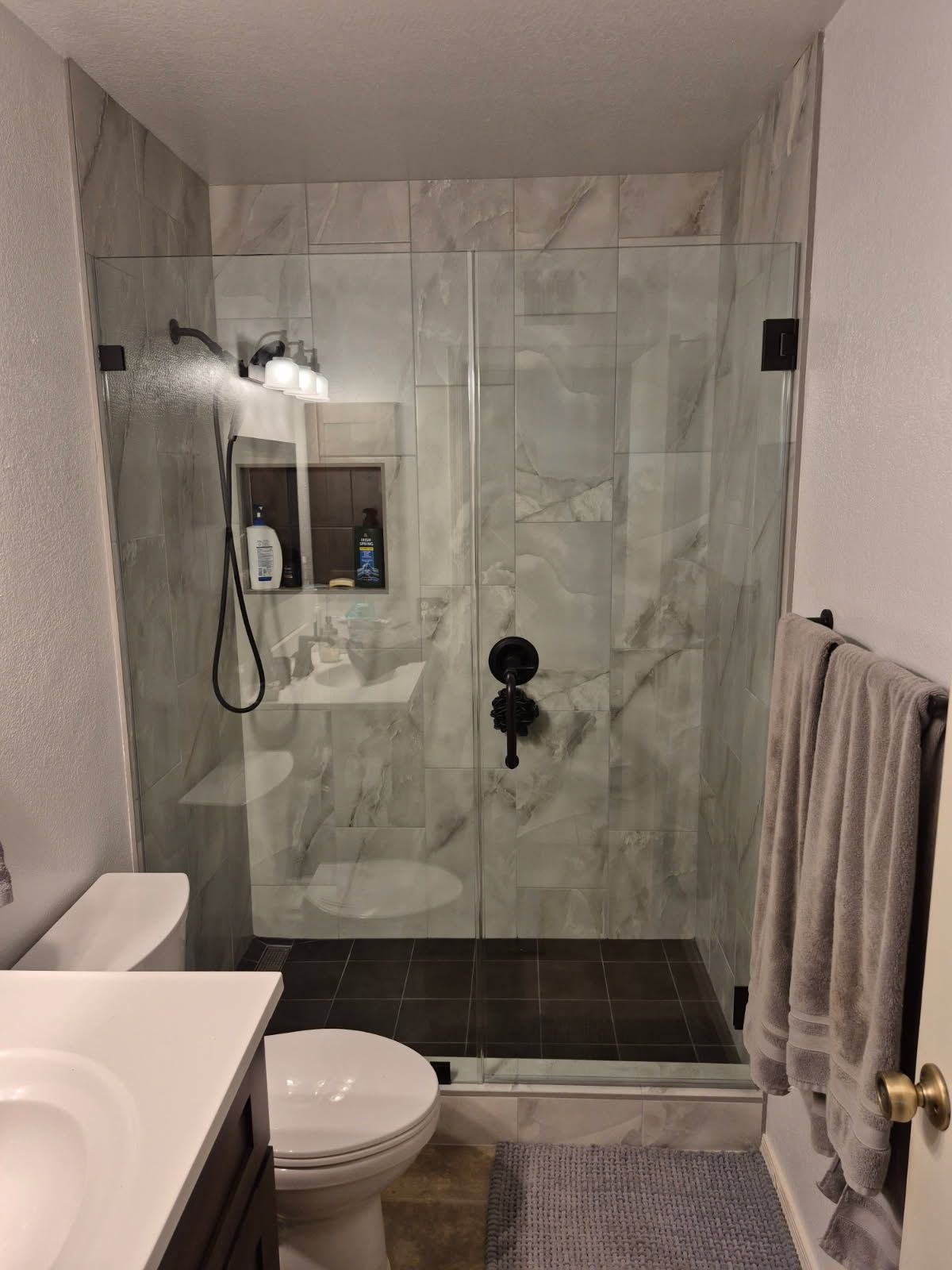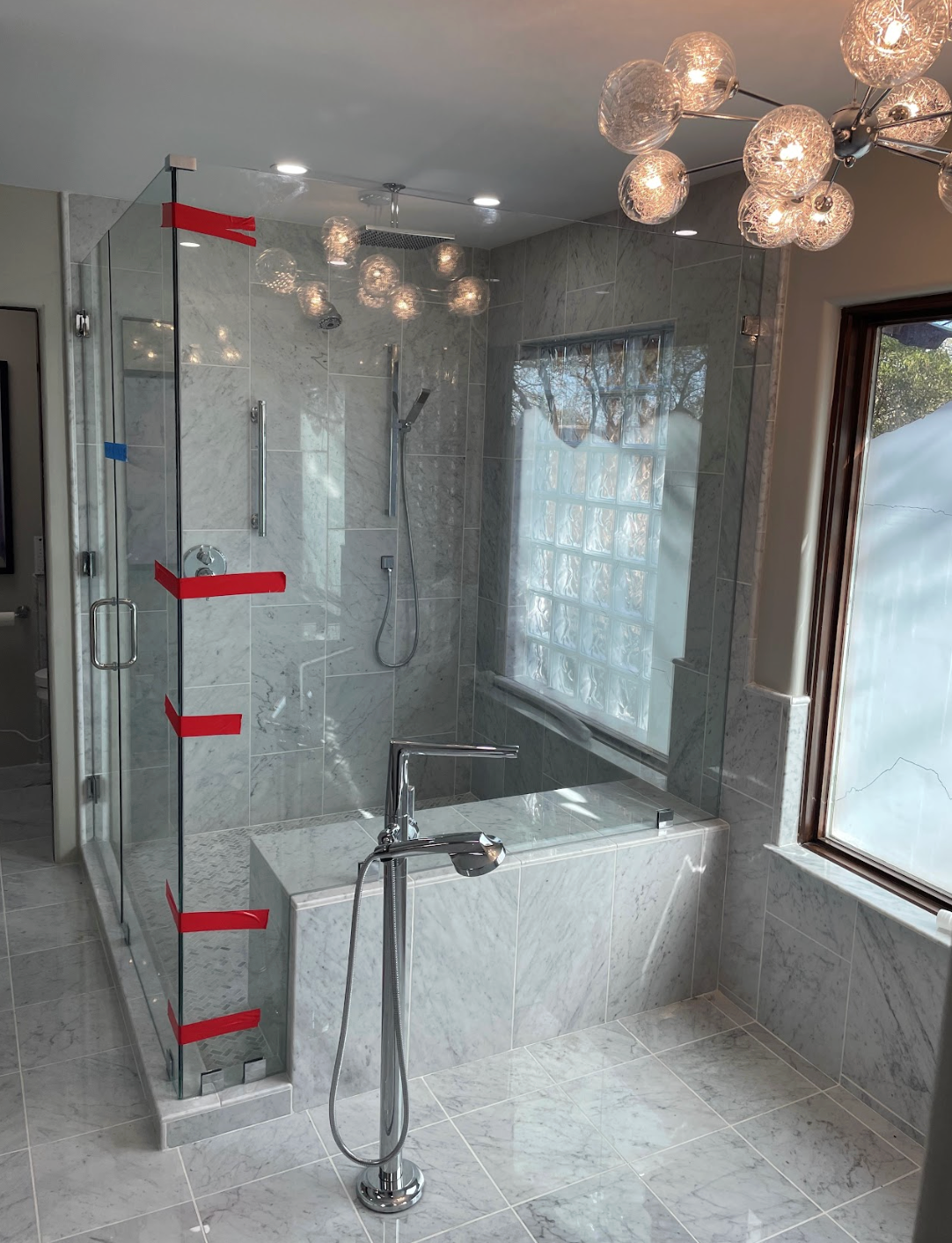
Lets Compare 3/8" Starphire Glass vs. 3/8" Clear Glass
A side-by-side breakdown of iron content, light transmittance, tile compatibility, and cost for Phoenix shower installations.
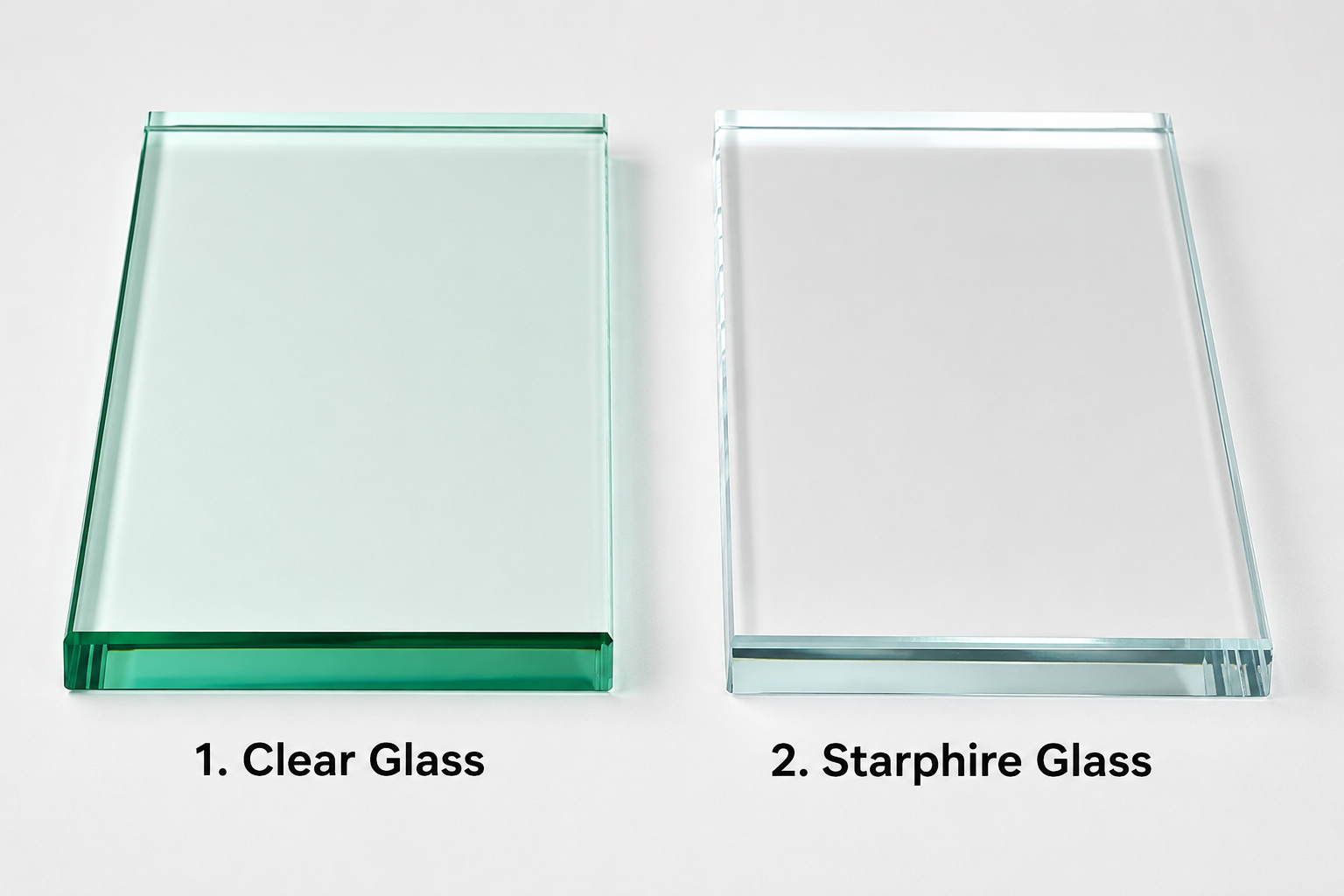
Most Phoenix homeowners don't notice the green tint in standard shower glass, not until they see a frameless enclosure built with low-iron glass sitting right next to one. Then they can't unsee it.
The difference between sapphire glass (also called low-iron or ultra-clear glass) and standard clear glass comes down to iron content. Standard float glass contains trace amounts of iron oxide that cast a distinctly green hue, especially visible along the edges and in larger panels. Low-iron glass has that iron content reduced by up to 90%, producing a genuinely neutral appearance that reads as water-clear from any angle.
Sapphire/low-iron glass delivers noticeably better clarity than standard clear glass, particularly in larger frameless shower enclosures. It costs roughly 20–30% more but makes a visible difference with white, gray, or light-colored tile. For Phoenix homes with abundant natural desert light, the upgrade tends to be obvious and lasting. ABC Glass Company installs both options and can show you physical samples of each at our Phoenix showroom before you commit to either.
What Is Standard Clear Glass?
Standard clear glass, sometimes called float glass, is the most widely used glazing product in residential construction. It's manufactured by floating molten glass over a bed of molten tin, which produces a flat, uniform panel with good optical clarity for most everyday applications.
The "clear" in standard clear glass is a relative term. Float glass contains between 0.1% and 0.15% iron oxide by weight. At typical window thicknesses, that iron is nearly invisible. But in shower glass, which is usually 3/8" thick tempered safety glass, the iron oxide accumulates enough to create a visible green cast along the edges and through larger surface areas.
This is completely normal and meets all applicable safety standards, including ANSI Z97.1 for human impact hazard locations. It's the glass used in the vast majority of shower enclosures across Phoenix, Glendale, and Peoria. For most applications, it performs exactly as expected.
Where it becomes a design consideration is in high-contrast installations: white subway tile, polished marble, light gray stone, or any palette where the green tint reads against the background rather than blending into it.
What Is Sapphire Glass (Low-Iron Glass)?
Low-iron glass, sold under trade names such as Starphire (PPG), Optiwhite (Pilkington), and Diamond Clear, is manufactured from raw materials with significantly reduced iron content. The result is a panel with light transmittance of 91–92%, compared to approximately 87–88% for standard float glass, and, more importantly, without the green color shift.
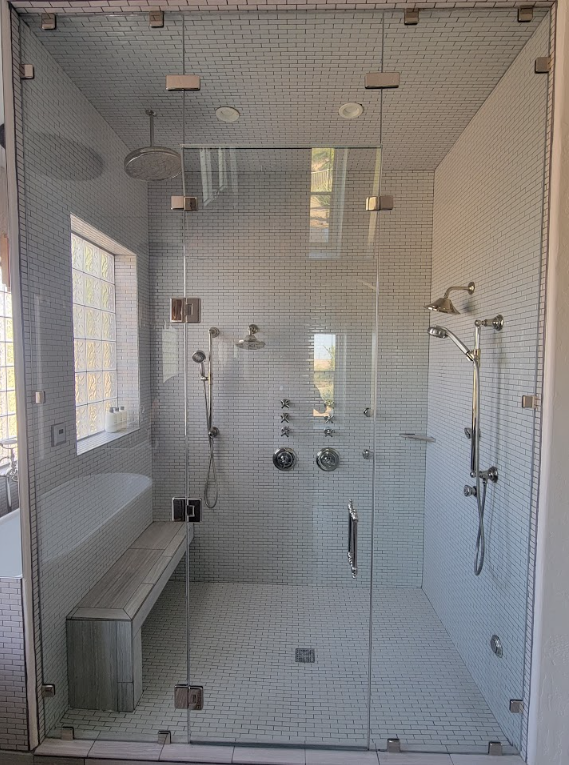
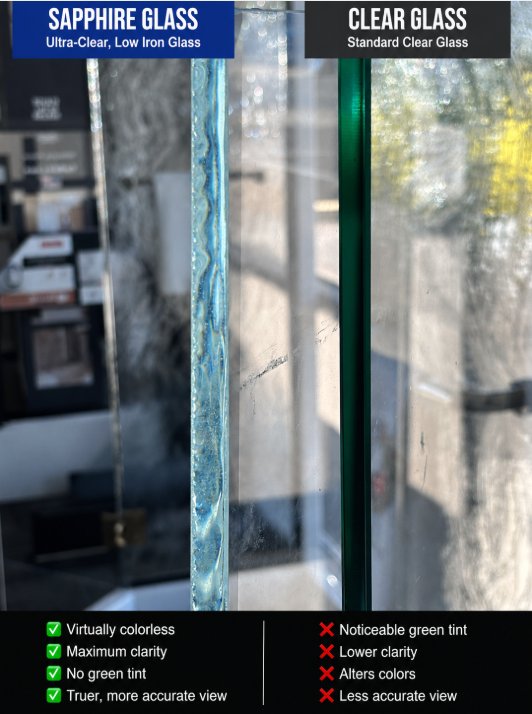
Viewed edge-on, the difference is unmistakable. Standard clear glass will show a green-to-blue-green edge. Low-iron glass shows a nearly white or very faintly blue edge. In a finished shower enclosure, this means the glass appears to nearly disappear, and the tile, stone, or wall finish reads clearly without a colored film over it.
ABC Glass Company's team regularly works with low-iron glass in frameless shower enclosures in Phoenix and semi-frameless shower installations throughout Phoenix, Scottsdale, and Paradise Valley.
The Green Tint Problem: Why It Matters More in Phoenix
Phoenix's desert light is one of the most intense in the country. With 299+ sunny days per year and high-altitude light that's more direct than coastal climates, natural illumination inside Valley homes is brighter and more revealing than in many other markets.
That matters for shower glass selection because iron-related color shift becomes more visible under strong, direct light. A shower enclosure that looks reasonably clear under diffuse Pacific Northwest light can read noticeably green in a sun-drenched Scottsdale master bath with a south-facing window.
Homeowners in Paradise Valley, Cave Creek, and Fountain Hills, areas with large, light-filled bathrooms and often premium tile selections, tend to notice the green tint more than in smaller, darker bathrooms. If your renovation includes natural stone, large-format porcelain, or a white marble-look tile, the color cast from standard clear glass is more likely to stand out.
Sapphire Glass vs. Clear Glass: How They Compare
Standard Clear Glass
- Iron content of approximately 0.10–0.15% iron oxide
- Visible green to blue-green tint along edges and in larger panels
- Light transmittance of approximately 87–88%
- Available in 3/8" and 1/2" tempered formats
- Meets ANSI Z97.1 safety standards
- Best suited for budget-friendly installs and darker tile palettes
- Baseline pricing with no material premium
- No difference in maintenance requirements
Sapphire / Low-Iron Glass
- Iron content of approximately 0.01% iron oxide
- Edge color reads near-white with virtually no visible tint
- Light transmittance of approximately 91–92%
- Available in 3/8" and 1/2" tempered formats
- Meets ANSI Z97.1 safety standards
- Best suited for white, light, or high-contrast tile and luxury bathrooms
- Carries a 20–30% material cost premium over standard clear
- No difference in maintenance requirements
- Compatible with all hardware finishes
Which Glass Works Best With Modern Tile?
The tile question is usually the deciding factor, and the answer is fairly consistent.
Standard clear glass holds up well with:
- Darker tile palettes (charcoal, slate, navy, deep earth tones)
- Heavily textured tile where surface detail is the visual focus
- Smaller shower enclosures where less glass surface is exposed
- Framed or semi-frameless designs where the metal framing already sets a visual boundary
Low-iron glass is the stronger choice with:
- White or off-white tile (subway, Carrara marble look, white large-format porcelain)
- Light gray, beige, or sand-tone palettes
- Natural stone where veining and color accuracy matter
- Fully frameless designs where the glass itself is the visual element
- Any shower where the design goal is to showcase the tile rather than the enclosure
Michelle, ABC Glass Company's front counter specialist with over 20 years of industry experience, keeps physical samples of both glass types at our Phoenix showroom on Cave Creek Road. Comparing them side by side under different lighting conditions takes about five minutes and almost always resolves the question faster than any photo or rendering.
To explore your options before you come in, visit our custom shower glass options in Phoenix for configuration and glass type guidance.
How Phoenix's Desert Light Changes the Equation
Most glass comparison guides are written for general audiences. Phoenix is a specific environment.
The combination of intense direct sunlight, low humidity, and the prevalence of light interior color palettes in Valley architecture (white walls, tile floors, bleached wood) means the conditions in which iron-related tint becomes visible are more common here than in many other parts of the country.
Phoenix homeowners also tend to have larger master bathrooms than the national average, which means more glass surface area per shower. A 3/8" tempered panel at 60 inches wide shows more iron tint accumulation than the same glass at 36 inches. Frameless walk-in showers, increasingly common in new construction in Scottsdale and Peoria, often feature glass panels measuring 72–84 inches tall and 36–60 inches wide. At that scale, the difference between standard and low-iron glass is visible at a glance. If you're comparing custom glass products in the Phoenix area, you can review specifications and panel options before scheduling a consultation.
Cost Differences: What to Expect
Low-iron glass adds roughly 20–30% to the glass material cost of a shower enclosure. On a typical custom frameless shower installation priced between $1,600 and $2,900, that translates to approximately $200–$600 in additional glass cost depending on the size of the enclosure.
For most Phoenix homeowners investing in a frameless shower remodel, that delta is worth evaluating against the total project budget. Spending $2,200 on a frameless shower with standard clear glass is a very different decision from spending $2,800 for the same enclosure with low-iron glass and a premium hardware finish.
A few factors that affect the total cost impact:
- Enclosure size: Larger panels mean more glass square footage, which increases the absolute cost difference
- Door configuration: A single swing door uses less glass than a full walk-in or double-door setup
- Hardware selection: Brushed nickel, matte black, and polished chrome hardware all look equally strong with either glass type
- Glass texture: If you're considering rain glass, frosted, or decorative textures on your custom shower glass, the iron content difference becomes less visible, and the upgrade may be less impactful
Maintenance: Is One Easier to Clean?
This is one of the most common questions, and the answer is: no meaningful difference.
Both standard clear glass and low-iron glass are tempered safety glass with the same surface hardness and the same basic cleaning requirements. Water spots, soap scum, and mineral deposits from Phoenix's notoriously hard water accumulate at the same rate on both. What changes slightly is how visible the deposits are, because low-iron glass appears more neutral; water spots may be slightly more noticeable against it than against the green-tinted background of standard clear glass.
The practical solution for either glass type in the Phoenix Valley is the same:
- Use a quality squeegee after each shower
- Apply a citric acid cleaner or white vinegar solution monthly to address mineral buildup
- Consider a rain-pattern or frosted texture on either glass type to hide water spots more effectively than smooth, clear glass
Neither glass type requires specialized products or professional cleaning services. The one-year workmanship warranty ABC Glass Company provides for all shower installations covers the hardware and installation, a standard consistent across the industry.
What Our Design Expert Recommends
After 50+ years at the same Phoenix location and thousands of shower installations, our team has seen both glass types perform across virtually every bathroom configuration in the Valley.
The short version of what Michelle and our install crew see most often:
If you're tiling with anything in the white, cream, or light gray family, and especially if you're investing in natural stone or large-format porcelain, low-iron glass is the upgrade that matches what you're trying to accomplish. The glass becomes secondary. The tile and stone take center stage.
If you're working with a darker palette, a highly textured surface, or a smaller enclosure, standard clear glass performs reliably and saves budget that might be better spent on hardware finishes or a custom threshold.
The most useful thing you can do before deciding is to see both options in person. Our showroom is open Monday through Friday, 8 AM to 4 PM, at 15054 N. Cave Creek Road in Phoenix. Call us at (602) 782-5007 to confirm availability and let us pull glass edge samples for your specific tile color.
Schedule Your Custom Shower Consultation in Phoenix
Both glass types are in stock and available for in-person comparison at ABC Glass Company's Phoenix showroom on Cave Creek Road. We've been serving Valley homeowners since 1972, and our team can walk you through glass samples, hardware finishes, and configuration options for your specific bathroom layout.
Request a free estimate or call us directly at (602) 782-5007. We offer free in-home measurements throughout Phoenix, Scottsdale, Paradise Valley, Cave Creek, Peoria, Glendale, Anthem, and the surrounding Valley.
ABC Glass Service Frequently Asked Questions
Is sapphire glass worth the extra cost?
For most frameless shower enclosures with light or neutral tile palettes, yes. The 20–30% material cost increase typically adds $200–$600 to a full enclosure project. In Phoenix bathrooms with abundant natural light and white or gray tile, the visual difference between low-iron and standard clear glass is easy to see and hard to ignore once you've seen them side-by-side. For darker tile selections or smaller enclosures, the upgrade is less impactful.
Does standard clear glass look green?
Yes, particularly along the edges and in larger panels. Standard float glass contains iron oxide that produces a green to blue-green tint, most visible where light passes through the glass at an angle or in direct sunlight. In Phoenix's intense desert light, this color shift tends to be more noticeable than in lower-light environments. It doesn't affect the structural integrity or safety rating of the glass, but it is a visible characteristic in finished shower enclosures.
What glass do luxury showers use?
Luxury shower installations in Scottsdale, Paradise Valley, and high-end Phoenix new construction almost universally use low-iron glass. Products like Starphire (PPG) and Optiwhite (Pilkington) are the standard specification in premium shower enclosures because they allow the tile, stone, and hardware to read clearly without a color cast. Thickness is typically 1/2" tempered glass for frameless doors and fixed panels, which meets ANSI Z97.1 safety standards.
Is low-iron glass easier to clean?
No. Low-iron and standard clear glass have the same surface hardness and the same basic care requirements. Both accumulate water spots and mineral deposits at the same rate, which is a real consideration in Phoenix where hard water is common. Low-iron glass may make water spots slightly more visible against its neutral background. A squeegee after each shower and monthly mineral cleaner treatment will keep either glass type looking its best.
Which shower glass is best for Phoenix homes?
For Phoenix homes with light-colored tile and large, sun-lit bathrooms, low-iron (sapphire) glass is the better choice. The Valley's direct desert sunlight amplifies the green tint in standard clear glass, and large frameless panels show it more than smaller or framed enclosures. For darker tile palettes or budget-conscious projects, standard clear glass performs well and is used in the majority of Phoenix shower installations without any issues.
Can I use sapphire glass on semi-frameless or framed showers?
Yes. Low-iron glass is available in both 3/8" and 1/2" tempered formats compatible with semi-frameless and framed shower designs. The visual impact is less dramatic in framed designs because the metal rail and frame already create a visual boundary, but homeowners who look closely at the glass edge will still notice the difference. For frameless designs, the upgrade is significantly more visible.
The ABC's Of Glass